

IT Support for Healthcare Clinics in Vancouver: Protecting Patient Data in 2026
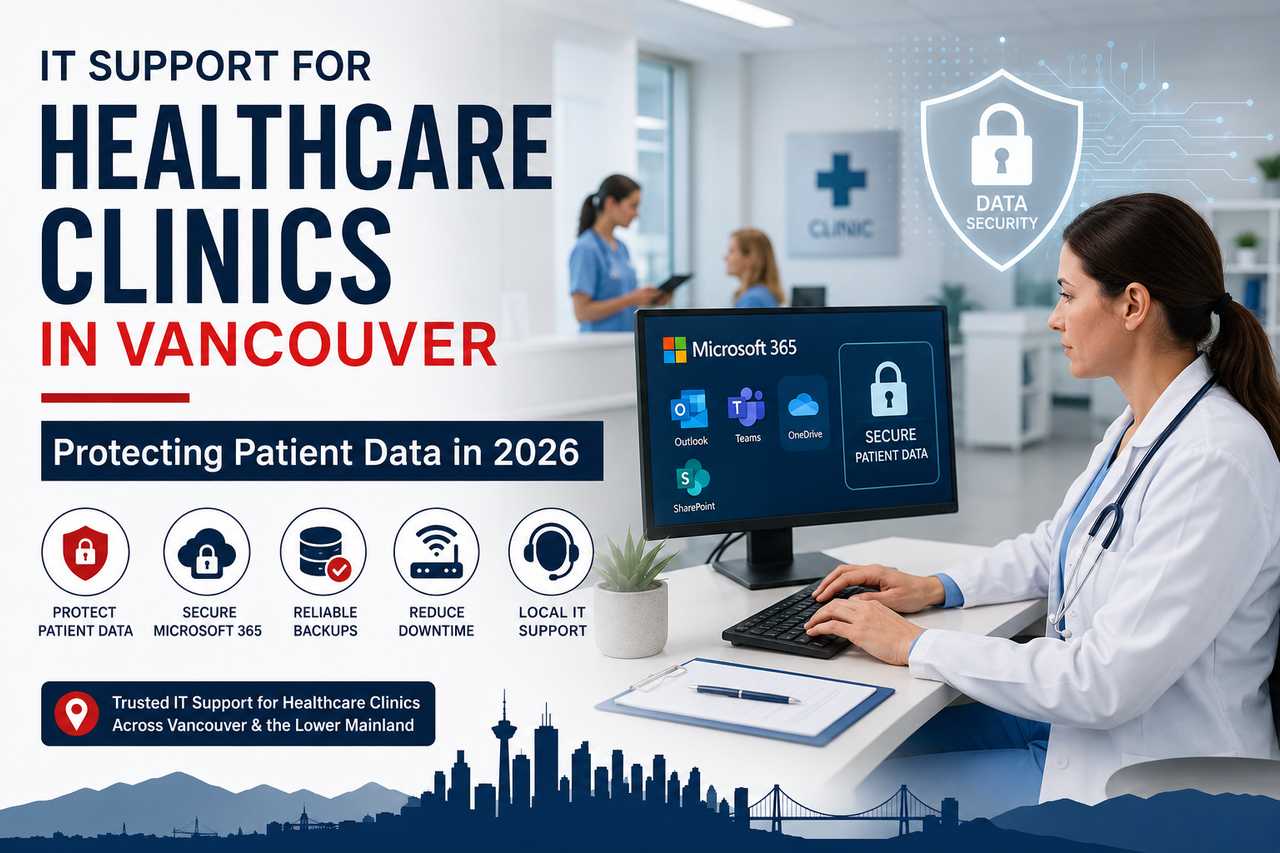
Healthcare clinics in Vancouver rely heavily on technology every day. Patient records, appointment systems, billing platforms, email communication, cloud storage, diagnostic files, and remote access tools all play a role in keeping the clinic running smoothly.
But healthcare technology also comes with serious responsibility. Clinics handle sensitive patient information, and even a small IT issue can lead to privacy concerns, downtime, missed appointments, or loss of trust.
In 2026, healthcare clinics across Vancouver, Burnaby, Richmond, Surrey, and the Lower Mainland need IT support that goes beyond basic troubleshooting. The right IT partner should help secure systems, protect patient data, reduce downtime, and support day-to-day clinic operations.
Why Healthcare Clinics Need Specialized IT Support
A healthcare clinic is not the same as a regular office. If a computer is slow, email is down, or a system cannot access patient files, the impact is immediate. Staff may not be able to check in patients, process forms, access records, or communicate with other providers.
Clinics also need stronger security because patient data is private and sensitive. A compromised email account or lost device can create serious privacy and operational risks.
That is why healthcare IT support should focus on three things: reliability, security, and compliance-minded processes.
1. Protecting Patient Data Must Come First
Patient data is one of the most sensitive types of information a business can store. Healthcare clinics need to make sure that only authorized staff can access records, documents, and communication tools.
This starts with proper user access controls. Staff should only have access to the systems and files they need for their role. Shared accounts should be avoided whenever possible because they make it harder to track activity and manage accountability.
Clinics should also review permissions regularly, especially when employees change roles or leave the organization. A structured onboarding and offboarding process can reduce unnecessary risk.
2. Microsoft 365 Needs Proper Security Configuration
Many healthcare clinics use Microsoft 365 for email, calendars, Teams, SharePoint, and OneDrive. It is a powerful platform, but it needs to be configured correctly.
Common risks include weak passwords, missing multi-factor authentication, open sharing links, too many admin users, and unmanaged devices accessing clinic data.
Clinics should enable multi-factor authentication for every user, restrict external sharing, review mailbox permissions, and monitor suspicious login activity. If your clinic relies on Microsoft 365, professional Microsoft 365 support can help secure the environment properly.
3. Backups Should Be Tested Regularly
Backups are critical for healthcare clinics. If records, forms, scanned documents, or appointment data are lost, the clinic may not be able to function properly.
Many clinics assume their data is protected because they use cloud systems. But cloud platforms do not always replace a proper backup and recovery strategy.
Backups should be tested on a regular schedule. It is not enough to know that backups exist. You need to know whether files can actually be restored quickly when needed.
A strong backup plan should cover important clinic files, Microsoft 365 data, local computers, servers, and any systems that support daily operations.
4. Email Security Is a Major Risk Area
Healthcare clinics receive a high volume of emails from patients, vendors, labs, insurance providers, and other organizations. This makes email one of the biggest security risks.
Phishing emails are becoming more convincing in 2026. Attackers may pretend to be a patient, a vendor, a software provider, or even a Microsoft security alert.
Email security should include advanced spam filtering, anti-phishing protection, attachment scanning, external sender warnings, and employee awareness training.
A managed approach to cybersecurity services can help reduce the chances of a successful phishing or account takeover incident.
5. Clinic Downtime Can Affect Patient Care
Downtime in a healthcare clinic is not just frustrating. It can affect appointments, billing, communication, and access to patient information.
Common causes of downtime include aging computers, weak Wi-Fi, failed updates, software conflicts, internet outages, and unmanaged security issues.
Proactive IT support helps prevent many of these problems before they interrupt the clinic. Regular monitoring, patching, maintenance, and security reviews can make a noticeable difference.
This is where managed IT services can provide strong value for clinics that cannot afford repeated disruptions.
6. Network Reliability Still Matters
Even if most systems are cloud-based, your clinic still depends on a reliable local network. Wi-Fi, firewalls, switches, printers, scanning stations, and workstations all need to work properly.
Clinics should separate staff networks from guest Wi-Fi, keep firewall firmware updated, and ensure that network equipment is properly installed and maintained.
Poor Wi-Fi or unstable internet can slow down front desk staff, interrupt video appointments, and create unnecessary stress for the team.
Professional network services in Vancouver can help clinics build a more reliable and secure foundation.
7. Documentation Helps Reduce Risk
Healthcare clinics should have clear internal IT policies. These do not need to be overly complicated, but they should explain how staff handle passwords, devices, patient data, email, remote access, and security incidents.
Good documentation helps everyone follow the same process. It also supports better training, smoother onboarding, and faster response during an incident.
Clinics that want stronger processes may benefit from compliance support services to organize policies, access reviews, and incident response planning.
What Healthcare Clinics Should Look for in an IT Provider
- Experience supporting healthcare or professional service environments
- Strong understanding of Microsoft 365 security
- Cybersecurity-first approach
- Reliable help desk support
- Backup and recovery planning
- Network and Wi-Fi support
- Clear communication and documentation
Final Thoughts
Healthcare clinics in Vancouver need IT support that understands the importance of privacy, reliability, and patient trust. Technology should make clinic operations smoother, not create daily frustration or security risk.
In 2026, clinics should focus on securing Microsoft 365, protecting patient data, testing backups, improving network reliability, and working with an IT partner that takes cybersecurity seriously.
A proactive IT strategy can help your clinic reduce downtime, protect sensitive information, and support better day-to-day operations.